 EN
EN IT
IT
Wool Processing
Learn about the different stages of wool processing. On this page we explain how wool is processed from the time when the unwashed raw wool arrives at the mill to when it has been processed to wool tops.
Sorting
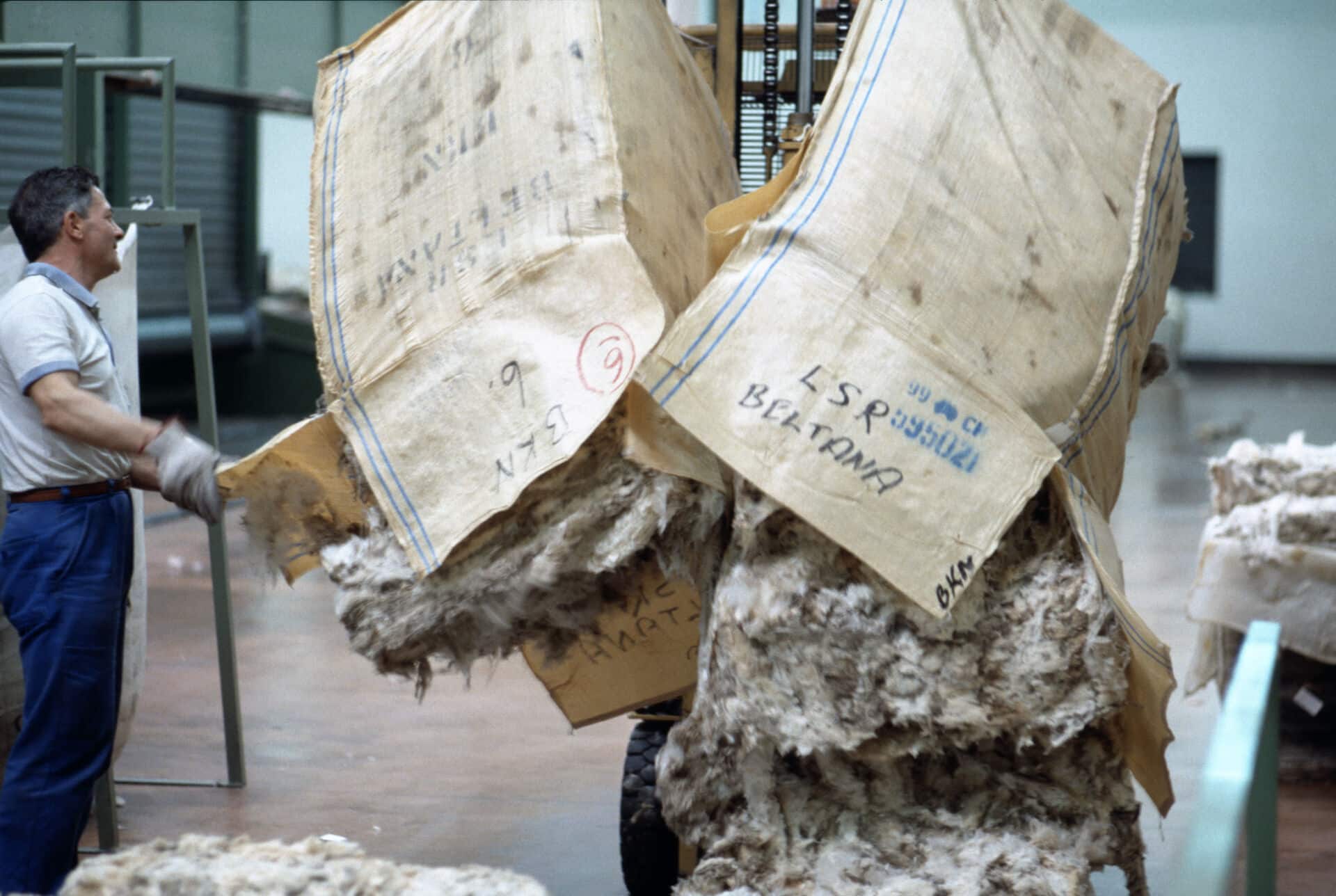
Production batches with the same characteristics are obtained by blending wools coming from different farms in various areas; the bales are selected, checked and unpacked. The average size of the production batches is between 10 to 30 tons but it varies depending on the type
Scouring
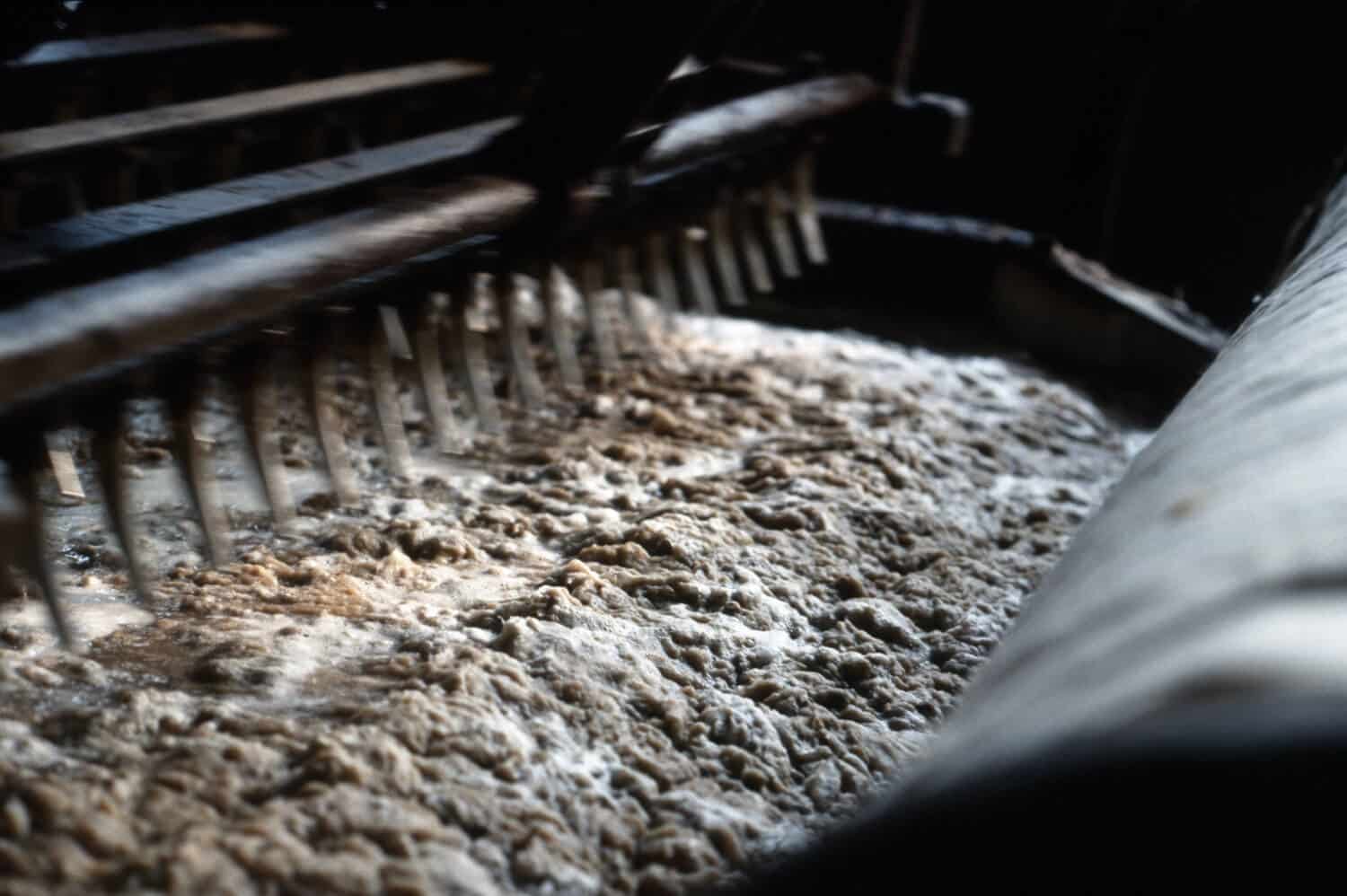
Greasy wool is passed through scouring lines to wash out the wool grease and other contaminations. The scouring yield varies between 55% and 80% according to the type of wool and its origin.
Carding
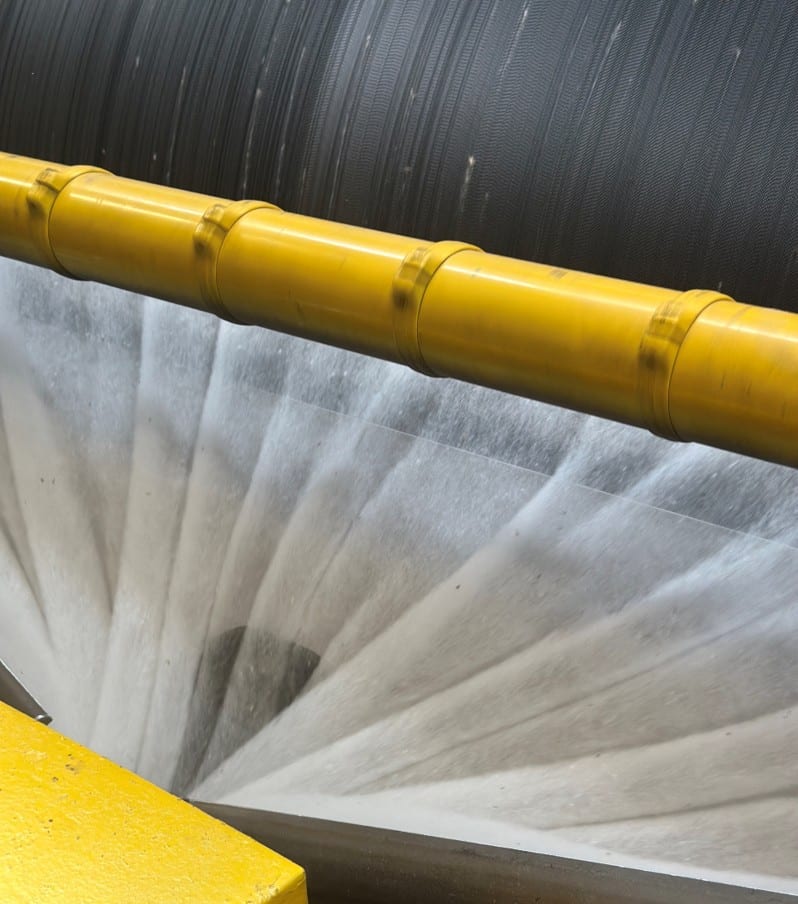
Washed and dried wool is passed through a series of automatic cards which straighten and align the fibres and remove the vegetable matter. The waste of this industrial process is a by-product, called ‘burrs’.
Pre-Combing Preparation
The carded sliver goes through three sets of drawing frames, to further parallelise the fibres.
Combing
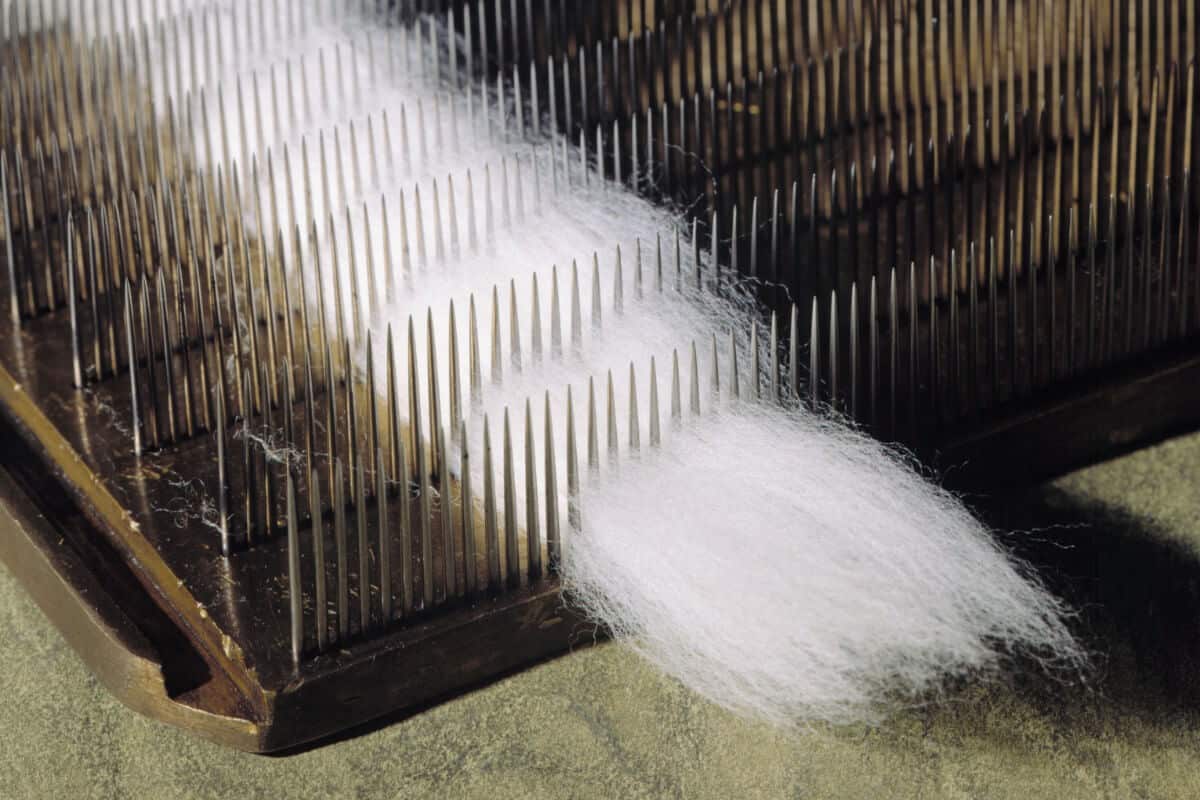
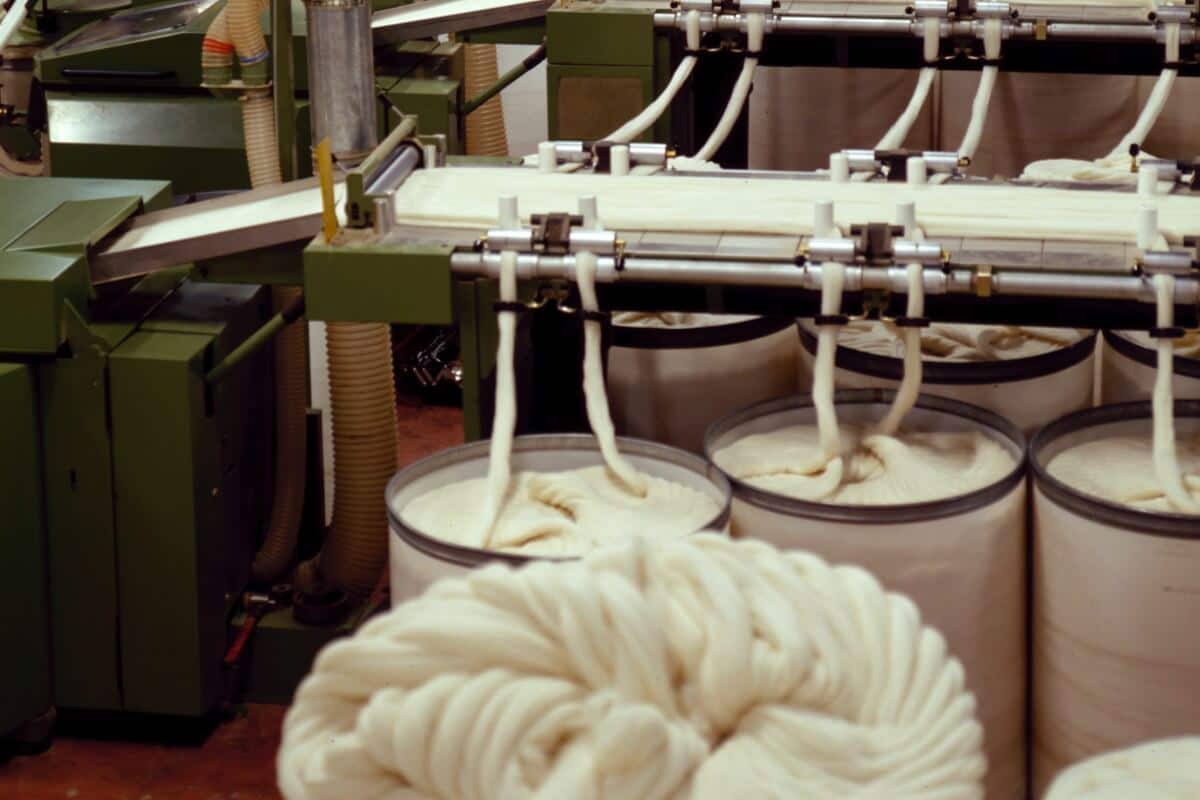
The combing machines remove fibre agglomerates, vegetable matter and the short fibres from the sliver; these droppings are a by-product called ‘wool noils’. Traditionally, the combing machines’ output is a continuous worsted sliver. However, sometimes the sliver is blown into ‘flakes’; this is the so called ‘Open tops’, which is used for woollen spinning.
Gilling and Finishing
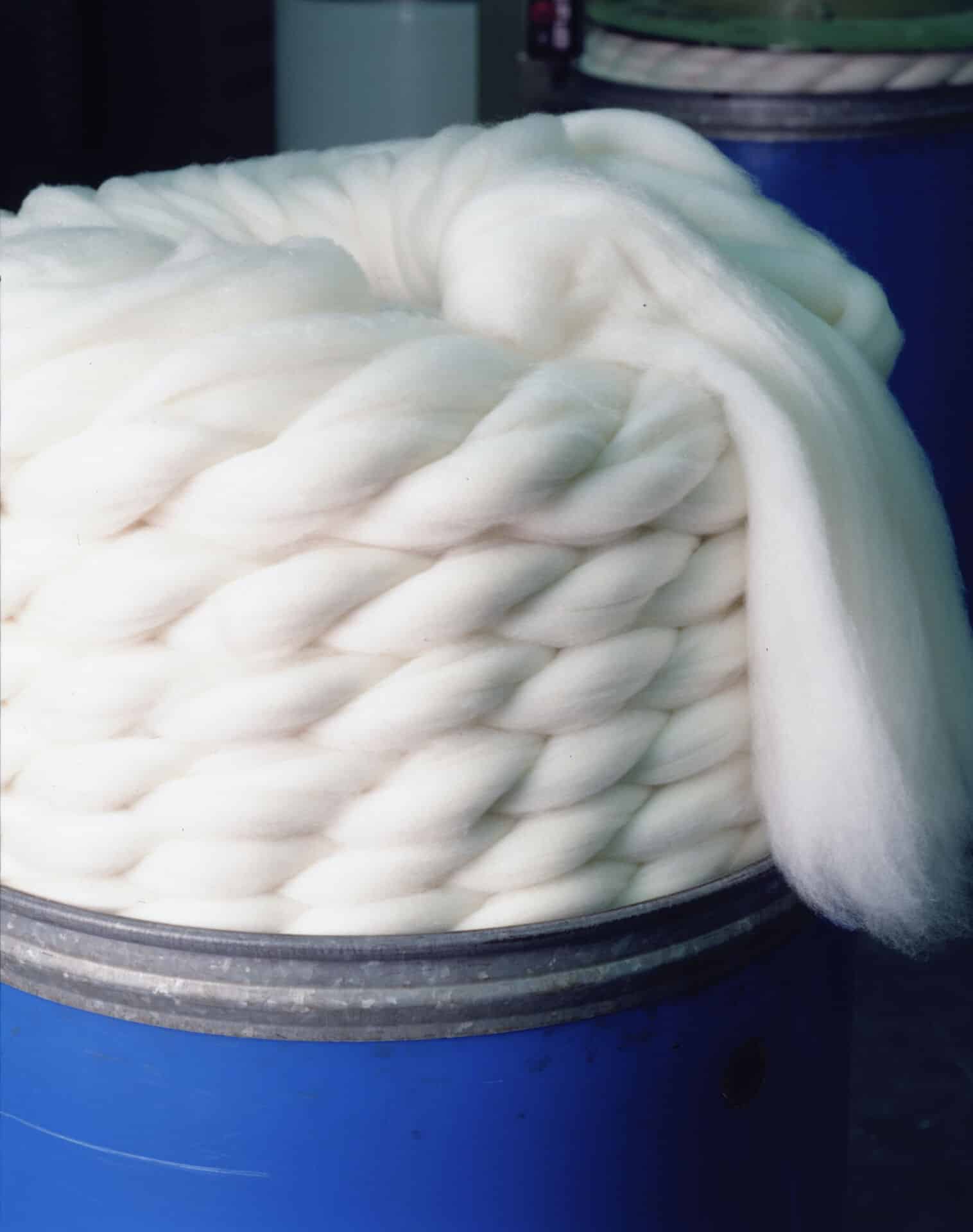
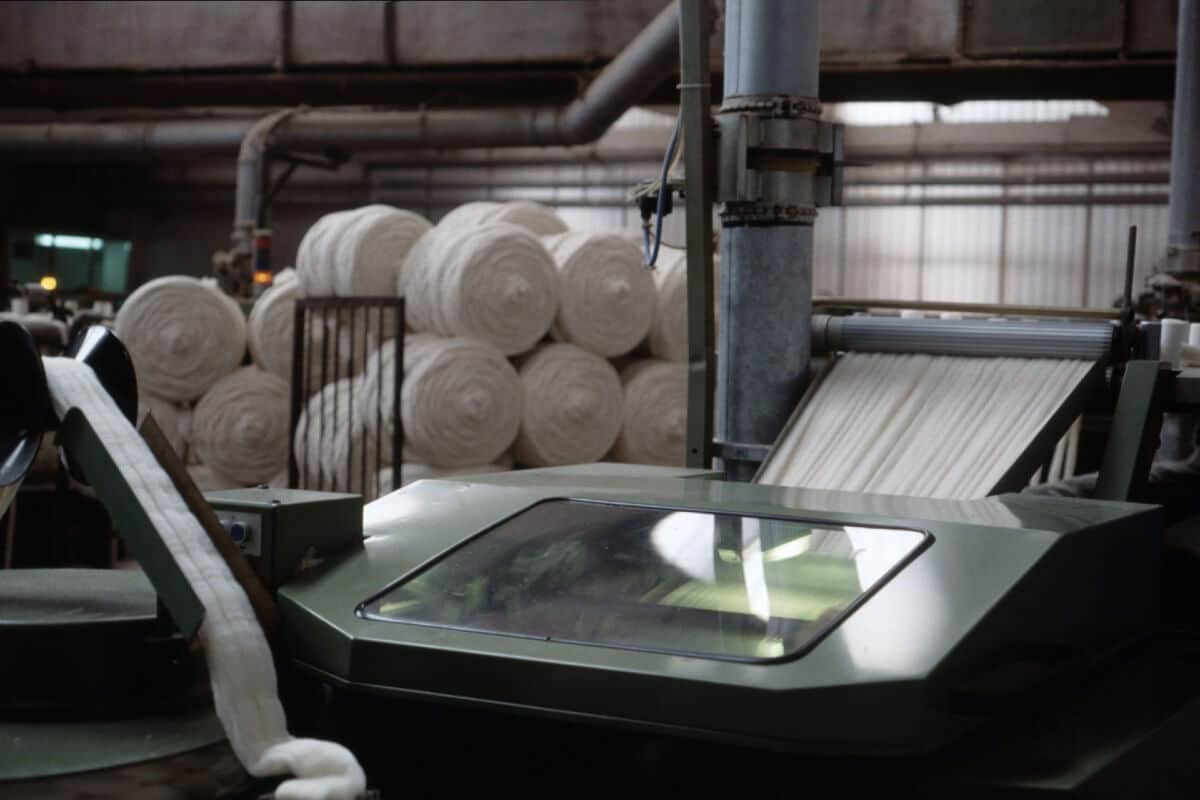
Following combing, the wool tops sliver goes through two finishing gills. The first removes the wave pattern that occurs on the combed sliver due to the action of the combing machine. The second gilling regulates the actual weight per metre of the sliver, which is then wound into bobbins or bumps, with a diameter of 400 or 800 millimetres.
Packaging
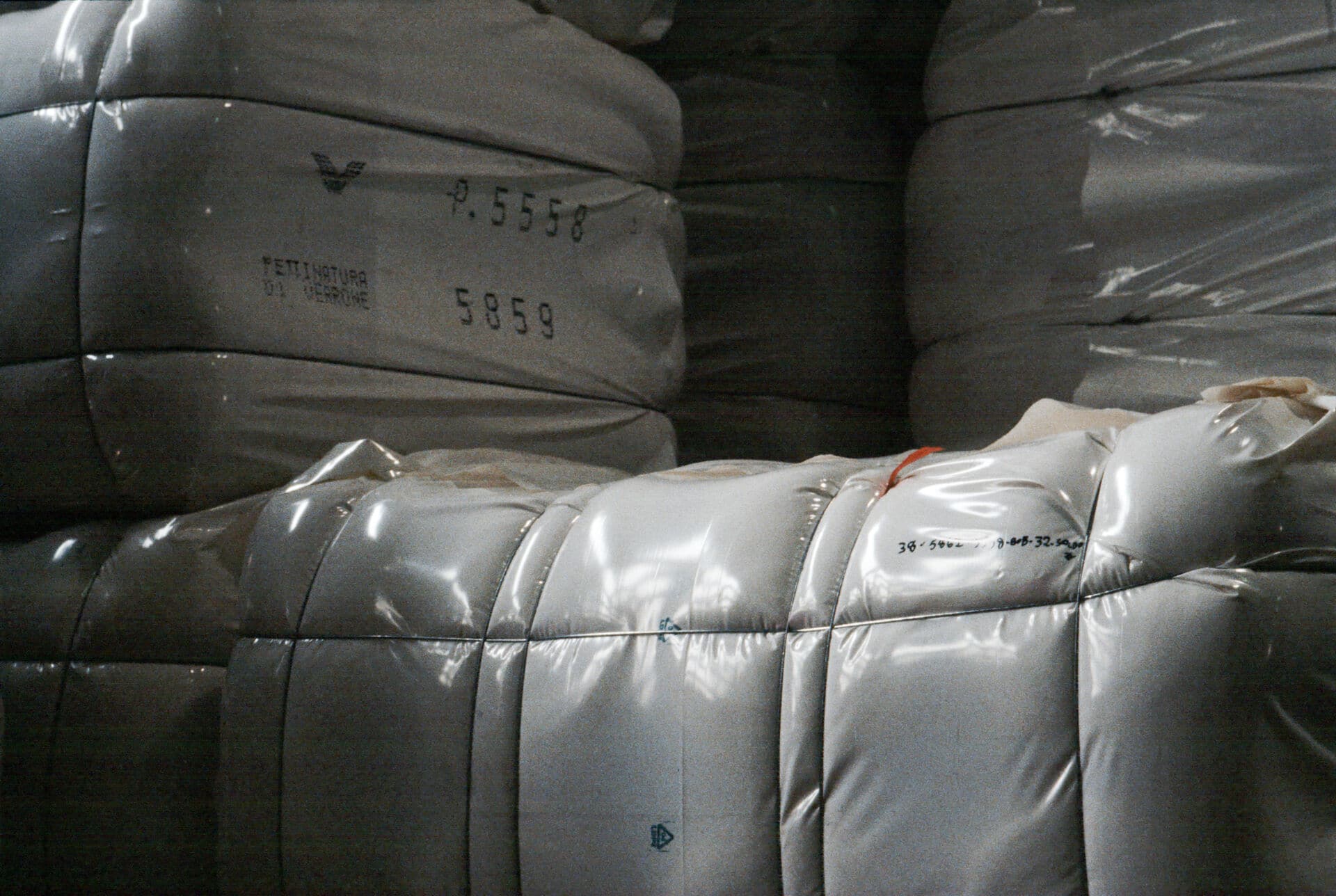
Bumps or bobbins are packed in bales weighting between 270 and 550 kg. The open tops is packed into bales weighting approximately 300 kg each. The by-products are also baled and sold to woollen spinners or to carbonizing plants, which will remove the vegetable matter through a chemical and mechanical process.